


Seeing your child limp can be worrying. Whether it appeared suddenly after a busy day or has gradually become more noticeable over weeks, many parents understandably fear that something serious may be wrong.
The reassuring news is that there are many different reasons why a child may limp, and not all of them are serious. However, persistent limping should never be ignored, particularly if your child complains of pain, has stopped participating in activities they usually enjoy, or seems less active than usual.
As a highly specialist paediatric physiotherapist, I regularly assess children with walking difficulties and help families understand the possible causes.
What Causes a Limp?
A limp occurs when a child changes the way they walk to reduce discomfort, compensate for weakness, or avoid putting weight through a painful joint.
Common causes include:
Minor injuries or bruising
Muscle strains
Growing pains
Joint inflammation
Hip conditions
Developmental differences
While some limps resolve quickly, others require medical assessment and treatment.
Perthes Disease
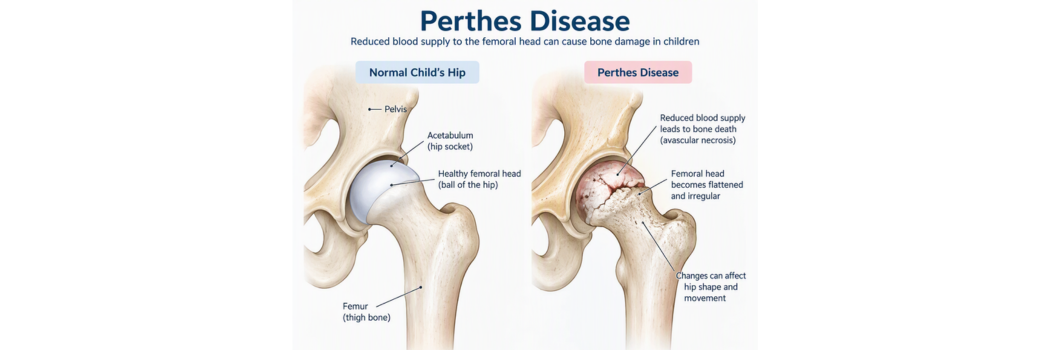
Perthes disease affects the blood supply to the hip joint, causing temporary damage to the ball of the hip (the femoral head).
It most commonly affects children between 4 and 10 years old.
Signs may include:
A persistent limp
Pain in the hip, groin, thigh or knee
Reduced movement of the hip
Fatigue during physical activity
Interestingly, children often complain of knee pain even though the problem originates in the hip.
Early identification is important to help protect hip function and guide appropriate management.
Slipped Capital Femoral Epiphysis (SCFE/SUFE)
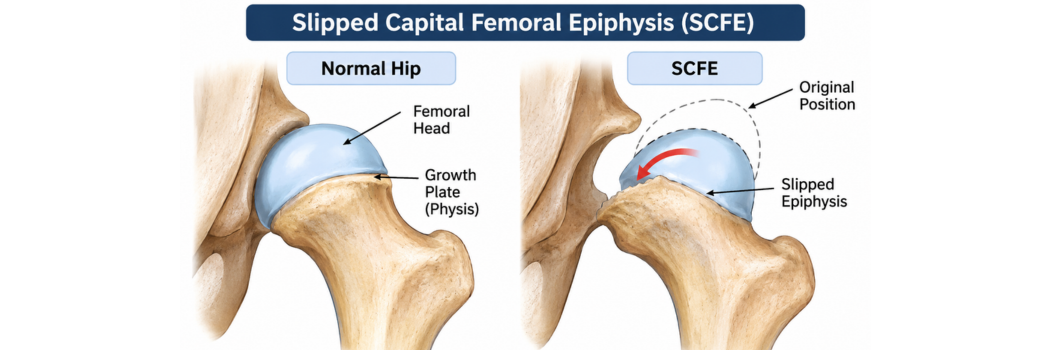
SCFE, sometimes called SUFE (Slipped Upper Femoral Epiphysis), is a condition where the top of the thigh bone gradually slips out of position at the growth plate.
It commonly affects older children and adolescents, particularly during growth spurts.
Symptoms can include:
Limping that gradually worsens
Hip, thigh or knee pain
Difficulty running or climbing stairs
Outward turning of the foot when walking
SCFE requires urgent medical assessment because delaying treatment can lead to significant damage to the hip joint.
If your child has a painful limp, especially during adolescence, prompt assessment is essential.
Developmental Dysplasia of the Hip (DDH)
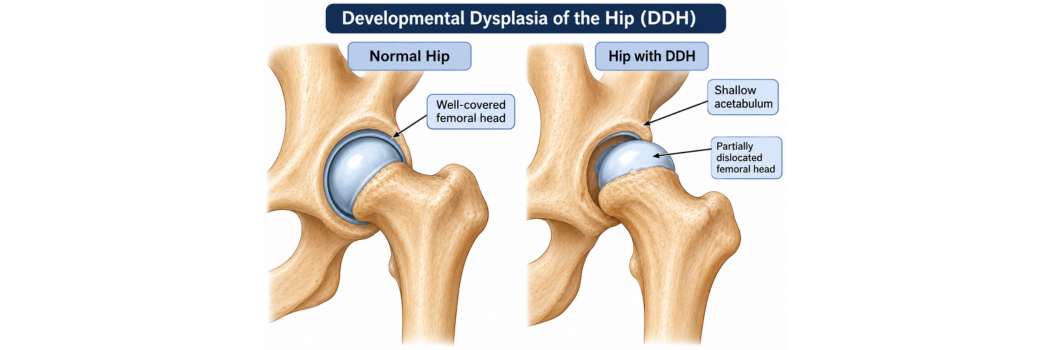
DDH occurs when the hip joint does not develop normally. While it is often identified in babies, some milder cases may not become obvious until a child is older and starts walking.
Children with DDH may present with:
A limp
Waddling gait
One leg appearing longer than the other
Reduced hip movement
When recognised and managed appropriately, children with DDH can achieve excellent outcomes.
Juvenile Idiopathic Arthritis (JIA)
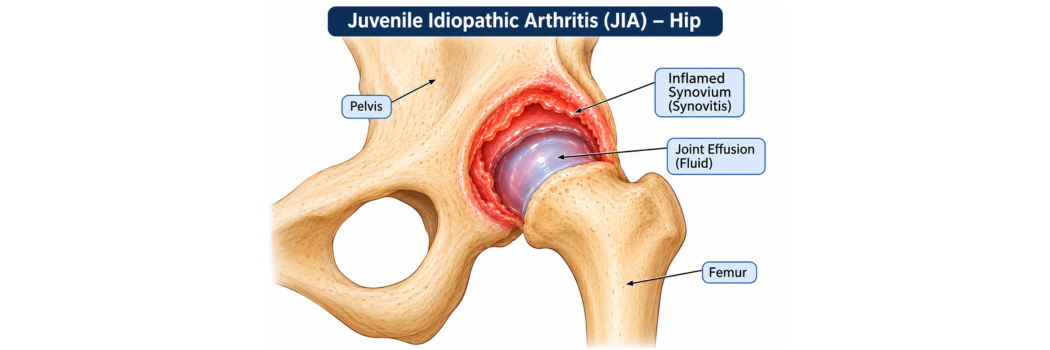
Juvenile Idiopathic Arthritis is a long-term inflammatory condition affecting children and young people.
Unlike adults with arthritis, children do not always complain of pain. Parents may first notice:
Morning stiffness lasting >30 minutes
Limping after rest
Swollen joints
Reduced participation in sport or play
Fatigue
The limp may improve as the day progresses, making JIA easy to overlook initially.
Early diagnosis and treatment can significantly improve a child's quality of life and reduce long-term joint problems.
When Should Parents Seek Help?
It is advisable to seek professional assessment if your child:
Has been limping for more than a few days
Complains of hip, groin, thigh or knee pain
Avoids walking, running or sports
Appears stiff or less mobile
Has swelling, redness or fever
Develops a limp without a clear injury
Trust your instincts. You know your child best.
How a Specialist Paediatric Physiotherapist Can Help
A detailed assessment can help identify whether your child's limp is likely to be related to the hip, knee, foot, muscle strength, coordination, joint mobility, or a more complex underlying condition.
Early assessment often provides reassurance for families and ensures that children who need further investigation are referred promptly to the appropriate medical team.
Concerned About Your Child's Limp?
If your child is limping, walking differently, or complaining of leg, knee or hip pain, don't wait and hope it will simply disappear.
Booking an assessment with a paediatric physiotherapist can help identify the cause, provide reassurance, and guide the next steps for your child's health and development.
Contact us today to arrange an appointment and give your child the best possible start towards comfortable, confident movement.
